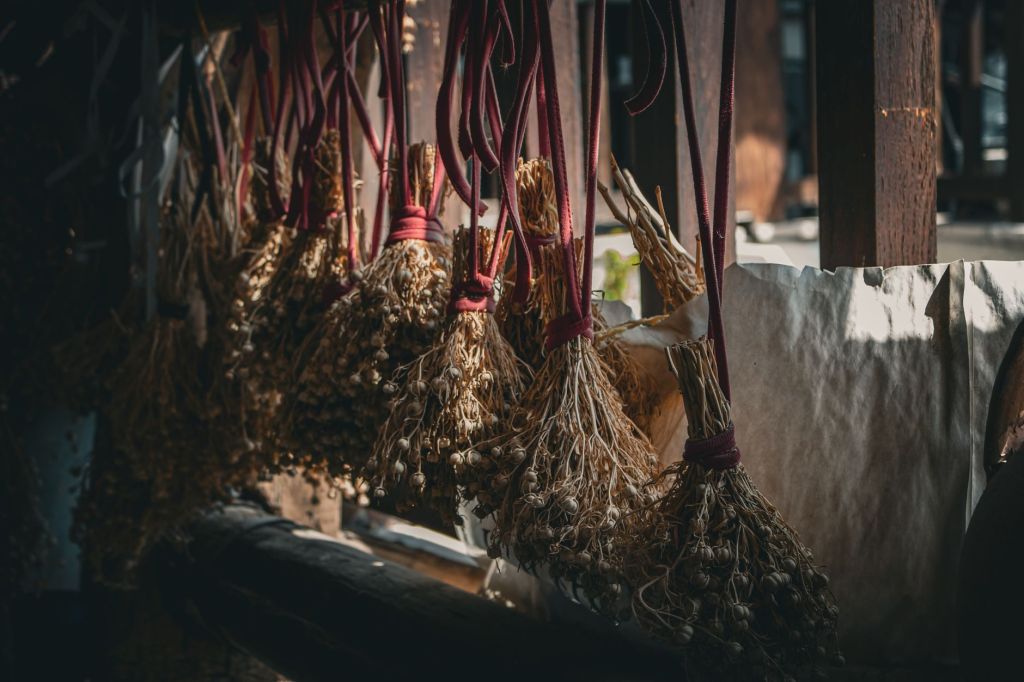
Herbs are at their most fragrant right before they flower. Which for a lot of garden herbs happens in mid-to-late summer. Drying is the simplest way to capture that flavor for the rest of the year, and unlike canning, there’s no acidity or processing time to worry about.
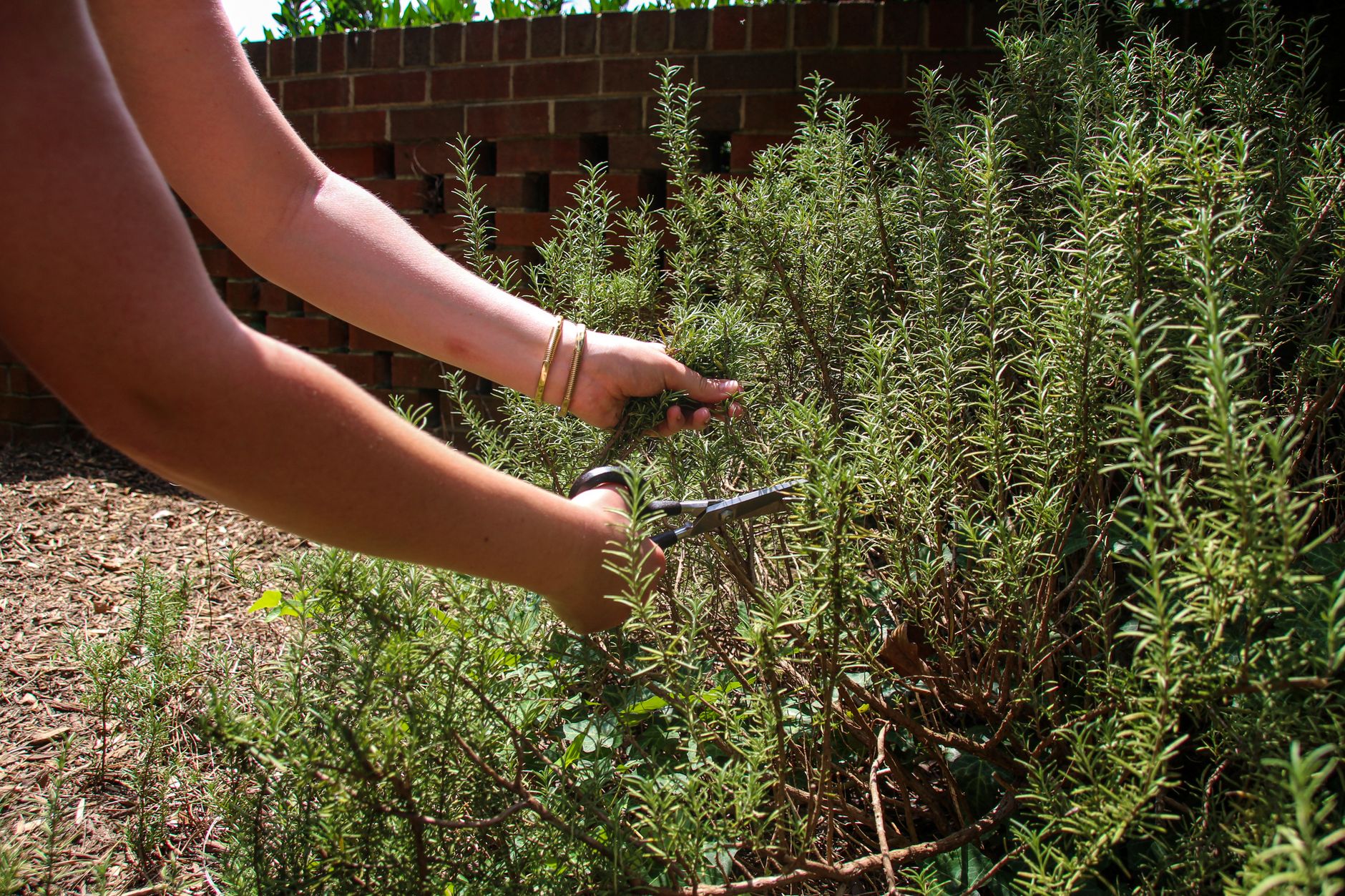
Harvest at the right time
Cut herbs in the morning after the dew has dried but before the heat of the day — essential oils (where the flavor lives) are highest then and start to fade as the day warms up. Harvest before a plant flowers if possible; once herbs bolt, flavor tends to turn bitter. A light trim actually encourages bushier regrowth, so don’t be shy about cutting.
Method 1: Air-drying (best for low-moisture herbs)
Works well for rosemary, thyme, oregano, sage, and dill. Bundle a handful of stems with a rubber band (it tightens as stems shrink) and hang upside down somewhere warm, dry, and out of direct sunlight — sunlight fades both color and flavor. Most herbs are fully dry in 1–2 weeks; you’ll know they’re ready when leaves crumble easily.
Method 2: Oven-drying (fastest, needs monitoring)
Better for high-moisture herbs like basil, mint, and parsley, which are prone to mold if air-dried slowly. Spread leaves in a single layer on a baking sheet and set the oven to its lowest temperature (ideally under 180°F), propping the door open slightly to let moisture escape. Check every 15–20 minutes — herbs can go from dry to scorched fast, and total time is usually 1–4 hours depending on the herb and your oven.
Method 3: Dehydrator (most consistent results)
If you have one, a food dehydrator gives the most even, predictable results with the least hands-on time. Set to 95–115°F, spread leaves in a single layer without overlapping, and check for full dryness starting around 1–4 hours depending on the herb.
Storing dried herbs
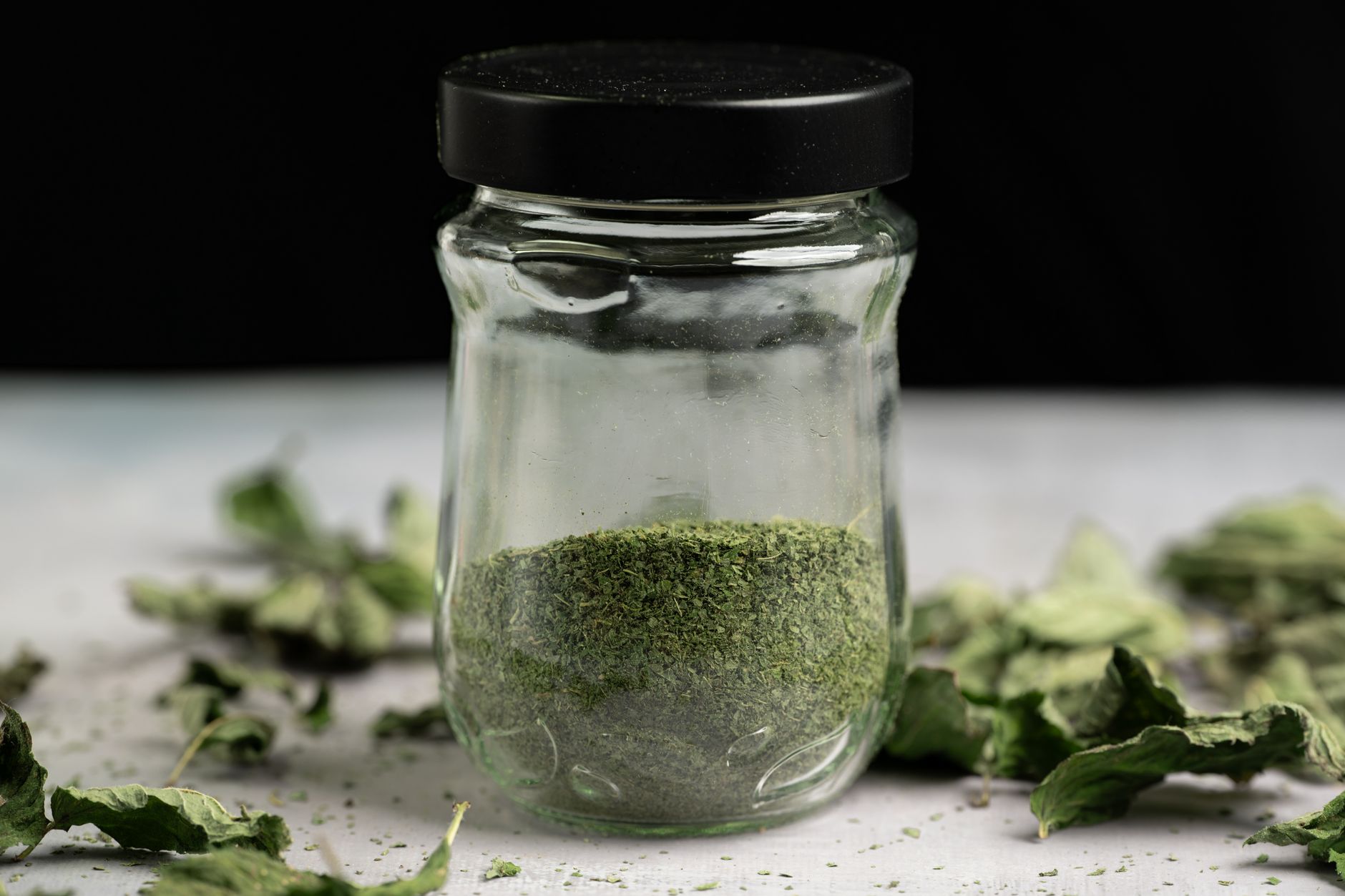
Once fully dry and cooled, crumble leaves off the stems and store whole (not pre-crushed — crushing releases oils and shortens shelf life) in an airtight jar, away from light and heat. Dried herbs are at peak flavor for about 6–12 months; after that they won’t spoil, but they’ll taste noticeably weaker.
How to tell if an herb is fully dry: it should crumble, not bend. Any flexibility means moisture is still trapped inside, which risks mold in storage — when in doubt, dry it longer.
Printable: Herb Drying Quick Reference
- Harvested in the morning, before flowering
- Method chosen based on herb type (low-moisture = air-dry, high-moisture = oven or dehydrator)
- Herbs fully crumble-dry before storing, not just “mostly dry”
- Stored whole, not crushed, in an airtight jar
- Jar labeled with herb name and date
- Kept out of direct light and away from the stove’s heat
📌 Pin this post: a side-by-side “which method for which herb” graphic is a strong, save-worthy format for this topic.


Leave a comment