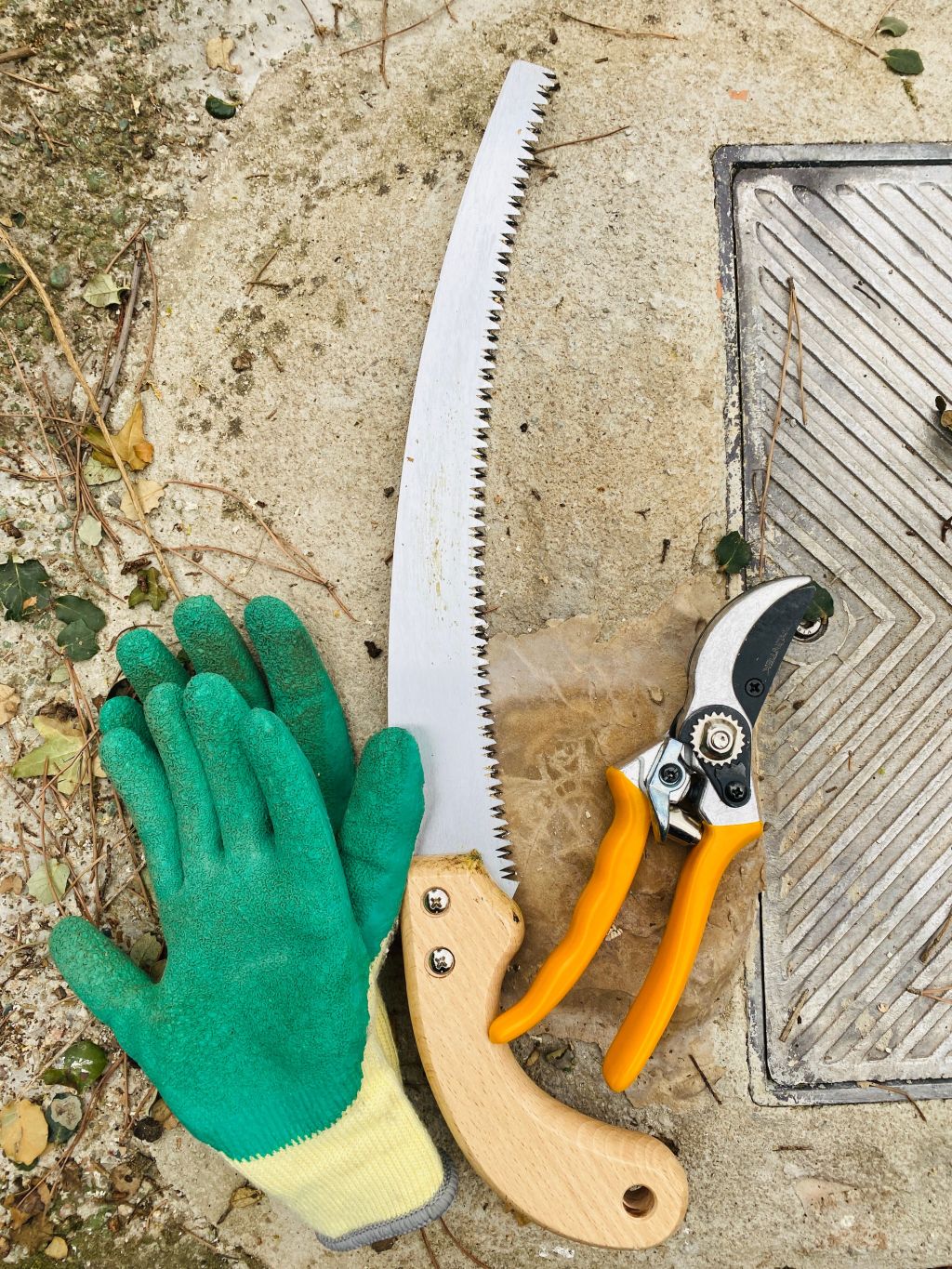
Tools that go into winter dirty, dull, and unprotected come out rusty, stiff, and half as useful come spring. A single afternoon of tool maintenance now will make next year’s first planting day go a lot smoother — and save you from replacing tools that could have lasted another decade.
Clean off all the soil. Dirt left on metal holds moisture against it all winter, which is the fastest path to rust. A stiff brush and a hose (dried thoroughly afterward) handles most of it; a wire brush gets stubborn caked-on dirt off shovels and hoes.
Sharpen cutting edges. Pruners, loppers, hoes, and shovel edges all cut and dig more easily — and more safely — when sharp. A basic sharpening stone or file works fine for most hand tools. A quality set of pruners from Garden Guru Tools holds an edge far longer than bargain-bin versions and is worth sharpening rather than replacing each year.
Oil metal parts. A light coat of household oil (or a specialty tool oil) on blades and moving parts prevents rust and keeps hinges moving freely. Wipe wooden handles with linseed oil to keep them from drying and cracking over winter.
Drain and store hoses properly. Fully drain hoses before coiling them for storage — water left inside can freeze, expand, and crack the hose. Store somewhere it won’t get run over or left in direct freeze-thaw cycles if possible.
Empty and store gas-powered equipment correctly. Run mowers and tillers dry of fuel or add a stabilizer, per the manufacturer’s instructions, before long-term storage.
Take inventory. While everything’s out and clean, note what’s worn out or missing so you’re shopping in the off-season instead of scrambling in spring.
Winterized tools aren’t just about longevity — they make the first warm day of spring feel like less of a scramble and more of a start.


Leave a Reply