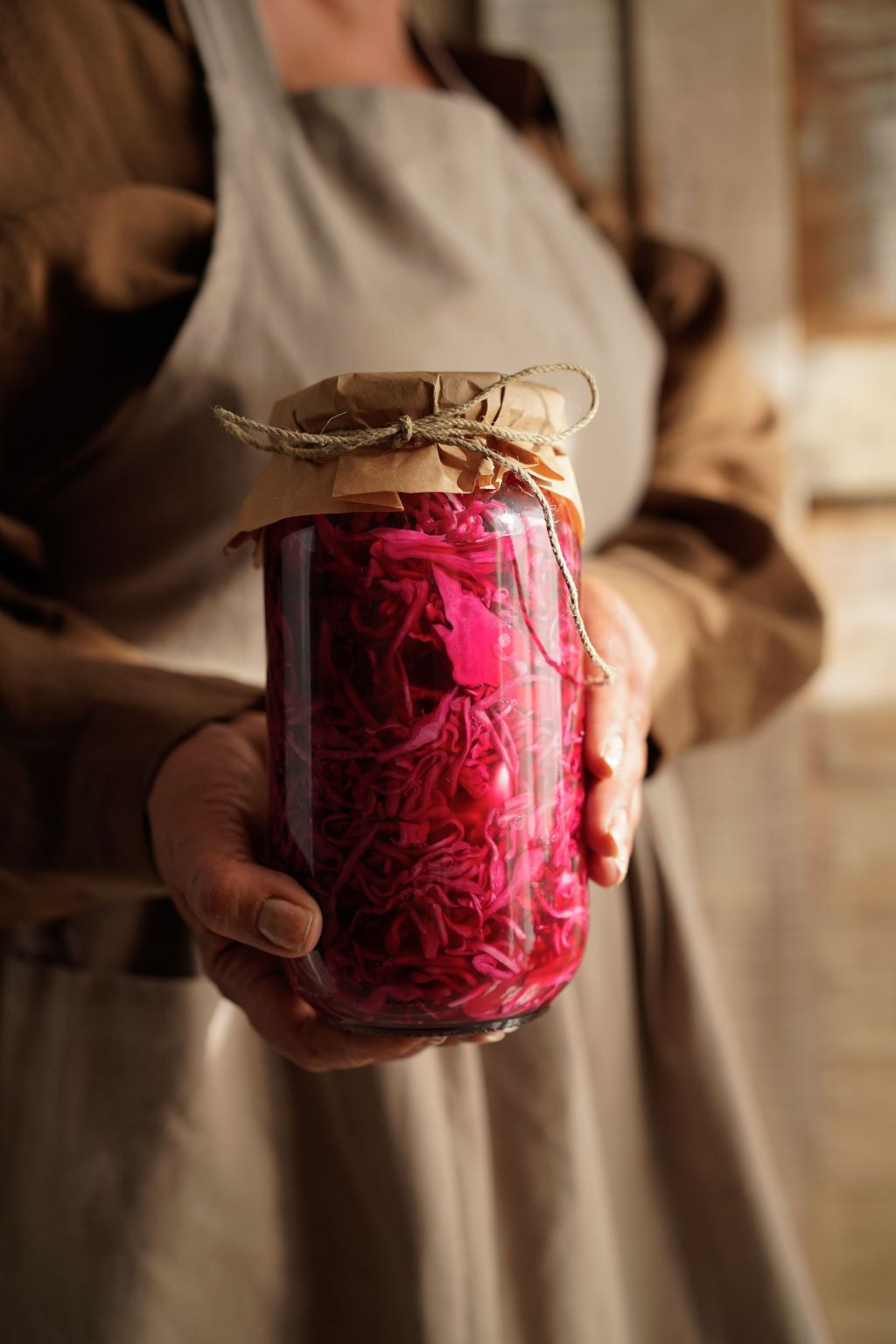
If canning feels like a project and freezing feels like it flattens flavor, fermenting is the preservation method most home gardeners overlook — and it’s one of the simplest. No special equipment, no processing times to calculate, just salt, vegetables, and time.
Start with cabbage or cucumbers. Sauerkraut and fermented pickles are the classic beginner projects because the ratios are forgiving and the results are reliably good.
Get the salt ratio right. A basic brine is about 2-3 tablespoons of non-iodized salt per quart of water, or for shredded cabbage, roughly 1.5-2% of the vegetable’s weight in salt massaged directly in until it releases its own brine.
Keep everything submerged. This is the single most important rule of fermenting. Vegetables exposed to air will mold; vegetables under the brine ferment safely. A clean weight — a smaller jar, a fermentation weight, or even a boiled rock — keeps everything down.
Let time and temperature do the work. Ferments develop faster in warm rooms (68-72°F is ideal) and slower somewhere cool. Start tasting after 3-5 days and let it go longer for more tang — there’s no single “done” point, just your preference.
Watch for the difference between normal and spoiled. Cloudy brine, white film (kahm yeast), and bubbling are all normal. Fuzzy mold, pink or orange discoloration, or a truly foul smell mean it’s time to toss the batch and start over.
Store finished ferments in the fridge, where the cold slows fermentation way down and they’ll keep well for months.
Once you’ve made one successful jar of sauerkraut, you’ll start looking at every extra vegetable in the garden as a potential ferment.


Leave a Reply